
Open-source software for learning-based robot control: from simulation to real-world deployment
Angela Schoellig
Technical University of Munich (TUM)
Robotics is one of the most challenging domains for software engineering. Deploying even simple applications requires integrating solutions from several domain experts, including navigation, path planning, manipulation, localization, human-robot interaction, etc. Integration of modules provided by the respective domain experts is one of the key challenges in engineering software-centric systems, yet only one of the cross-cutting software concerns that are crucial to robotics. As robots often operate in dynamic, partially observable, and populated environments, additional challenges include adaptability, robustness, safety, and security.
RoSE aims to bring together researchers and practitioners to identify new frontiers in software engineering for robotics, discuss challenges arising from real-world applications, and transfer the latest insights from research to industry.
RoSE 2026 seeks contributions addressing, but not limited to, the following topics related to robotics software engineering:

| Time | Title | Who | Slot |
|---|---|---|---|
| 08:45 - 09:00 | Reception | 15 min | |
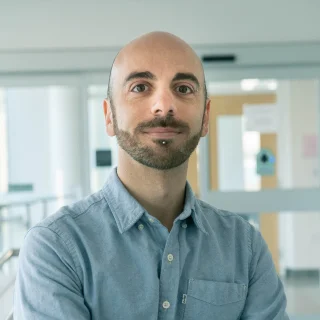
| 09:00 - 09:25 | Keynote 1 — Designing Navigation Frameworks on ROS 2 | Francisco Martín Rico | 25 min |
| 09:25 - 09:40 | Work-in-progress 1 — From Simulation to Reality: Autonomous 3D Exploration with DAEP on Heterogeneous Robots | Emil Wiman, Mariusz Wzorek, Piotr Rudol, Tommy Persson and Mattias Tiger | 15 min |
| 09:40 - 09:55 | Work-in-progress 2 — RANT: Ant-Inspired Multi-Robot Rainforest Exploration Using Particle-Filter Localisation and Virtual Pheromone Coordination | Ameer Alhashemi, Layan Abdulhadi, Karam Abuodeh, Tala Baghdadi and Suryanarayana Datla | 15 min |
| 09:55 - 10:10 | Work-in-progress 3 — CogNav: Human-Inspired Collision Avoidance Strategy | Mahsa Nikmard, Patrizio Pelliccione and Gianlorenzo D’Angelo | 15 min |
| 10:10 - 10:35 | Keynote 2 — The CO-HAND Project: An Autonomous Industrial PoC with TIAGo Pro | Michela Cavuoto | 25 min |
| 10:35 - 11:00 | Coffee-break/Posters | 25 min | |
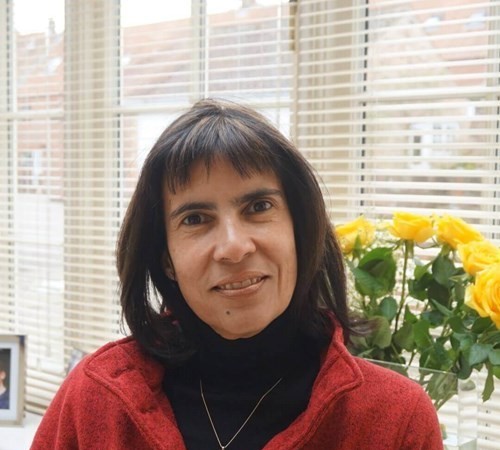
| 11:00 - 11:25 | Keynote 3 — Open-source software for learning-based robot control: from simulation to real-world deployment | Angela Schoellig | 25 min |
| 11:25 - 11:40 | Work-in-progress 4 — CrossMaps: a Confidence-Aware Open-Vocabulary Semantic Mapping for Rover Navigation | Jan-Niklas Klein, Sona Ghahremani, Christian Medeiros Adriano and Holger Giese | 15 min |
| 11:40 - 11:55 | Work-in-progress 5 — ORICF - Open Robotics Inference and Control Framework | Andrés Meseguer Valenzuela and Luis Miguel Bartolín Arnau | 15 min |
| 11:55 - 12:10 | Work-in-progress 6 — A Swarm Algorithm for Following Formations applied to Crazyflie Drones | Oliver Kosak, Philipp Kastenmüller, Fabian Schwaiger, Vinzenz Malke and Wolfgang Reif | 15 min |
| 12:10 - 12:25 | Work-in-progress 7 — ROS2 Connect: A new ROS2 over WAN Solution | Daniel Schott, Lakshminarasimhan Srinivasan, Christian Herrmann and Andreas Nüchter | 15 min |
| 12:30 - 14:00 | Lunch | 90 min | |
| 14:00 - 14:25 | Keynote 4 — Engineering of Norm-aware Self-Adaptive Robots using RoboStar | Ana Cavalcanti | 25 min |
| 14:25 - 14:40 | Work-in-progress 8 — Enabling Runtime Reconfiguration in Multimodal Teleoperation Systems | Luuk Lenders, Thijs Bink, Douwe Dresscher, Kenan Niu, Jan van Erp and Jan Broenink | 15 min |
| 14:40 - 14:55 | Work-in-progress 9 — A Software Architecture for ROS2–CNC Interoperability: Automated Collision-Free Robot Motion Planning and Deterministic Execution | Samed Ajdinovic, Matthias Marquart, Benjamin Kaiser, Siddieq Mansour, Andreas Wortmann, Oliver Riedel and Alexander Verl | 15 min |
| 14:55 - 15:10 | Work-in-progress 10 — tf2_rs: Bringing tf2 to Rust | Théo Engels, Antonio Paolillo and Ken Hasselmann | 15 min |
| 15:10 - 15:25 | Work-in-progress 11 — Wizard or Example? Supporting Robot Program Reuse Discovery Across Expertise Levels | Yoganata Kristanto, Mina Alipour, Miguel Campusano and Aljaz Kramberger | 15 min |
| 15:30 - 16:00 | Coffee-break/Posters | 30 min | |
| 16:00 - 16:25 | Keynote 5 — Do LLMs understand ROS computation graphs? | Ivano Malavolta | 25 min |
| 16:25 - 16:40 | Work-in-progress 12 — Are We Welcome Here? A Preliminary Study of Newcomer Onboarding in the ROS Ecosystem | Juliana Freitas, Elijah Phifer, Nabila Fairuz and Felipe Fronchetti | 15 min |
| 16:40 - 16:55 | Work-in-progress 13 — The Walking Packages: A Survival Analysis of ROS Repositories | Juliana Freitas, Elijah Phifer and Felipe Fronchetti | 15 min |
| 16:55 - 17:30 | Prizes/Next Edition | 35 min |
All dates are measured using the Anywhere on Earth Timezone (AoE)
Prospective participants are invited to submit:
Research Idea papers (structured one-page abstract) - we invite early‑career researchers to submit structured one‑page abstracts for presentation at our workshop. Submissions will not undergo peer review, but their quality and relevance will be closely evaluated by the organizing committee, who will invite the shortlisted ones to be shared within the event to foster open discussion of new ideas and forthcoming paper plans, remaining unpublished. Format: the one-page abstract must follow the ICRA double-column IEEE style (i.e., the standard ICRA manuscript format). (ras.papercept.net)
Industry reports (one-page abstract) - we invite industry contributors to submit one‑page abstracts that showcase fresh ideas, emerging trends, or real‑world experiences from the corporate sector. Submissions will not undergo peer review, but their quality and relevance will be closely evaluated by the organizing committee, who will invite the shortlisted ones to be shared within the event. For the shortlisted reports, publication on the RoSE website is optional, allowing authors to keep their work internal or make it publicly accessible. Format: the one-page abstract must follow the ICRA double-column IEEE style (i.e., the standard ICRA manuscript format). (ras.papercept.net)
Work-in-progress papers (six-page papers) - we invite submissions of work‑in‑progress papers, limited to six pages (including references), that present preliminary results, open challenges, lessons learned, or descriptions of tools and projects. All papers will undergo peer review, and accepted contributions will be published on the RoSE website. The accepted papers will be submitted for inclusion in a proceedings volume. Format: the six-page papers must follow the CEUR-WS (CEURART) single-column style. (CEUR-WS (CEURART) template)
The best paper authors will be invited for submission of extended results in the Frontiers research topic linked to the workshop and will be awarded a voucher for free publication in case of acceptance.
One-page abstracts (Research Ideas + Industry Reports): must use the ICRA submission format, as described in the PaperCept manuscript preparation guidelines. (ras.papercept.net)
Work-in-progress papers: must follow the CEUR-WS (CEURART) template and must consider a single blind submission process. All work-in-progress papers will be reviewed by the program committee on the basis of technical quality, relevance, significance, and clarity.
All submissions should be uploaded electronically in PDF format through EasyChair at this link: https://easychair.org/conferences/?conf=rose26
When submitting to RoSE 2026, the authors acknowledge that they comply with the Generative AI usage policy, based on existing policies proposed by IEEE, ACM, and Springer. It is forbidden to:
It is allowed (with explicit disclosure in the acknowledgments) to:
It is allowed (no need to disclosure):